
Bedtime rituals that actually last
Why the evening routine works, what makes one survive years rather than weeks, and how to build one that holds up through holidays, siblings and tired parents.
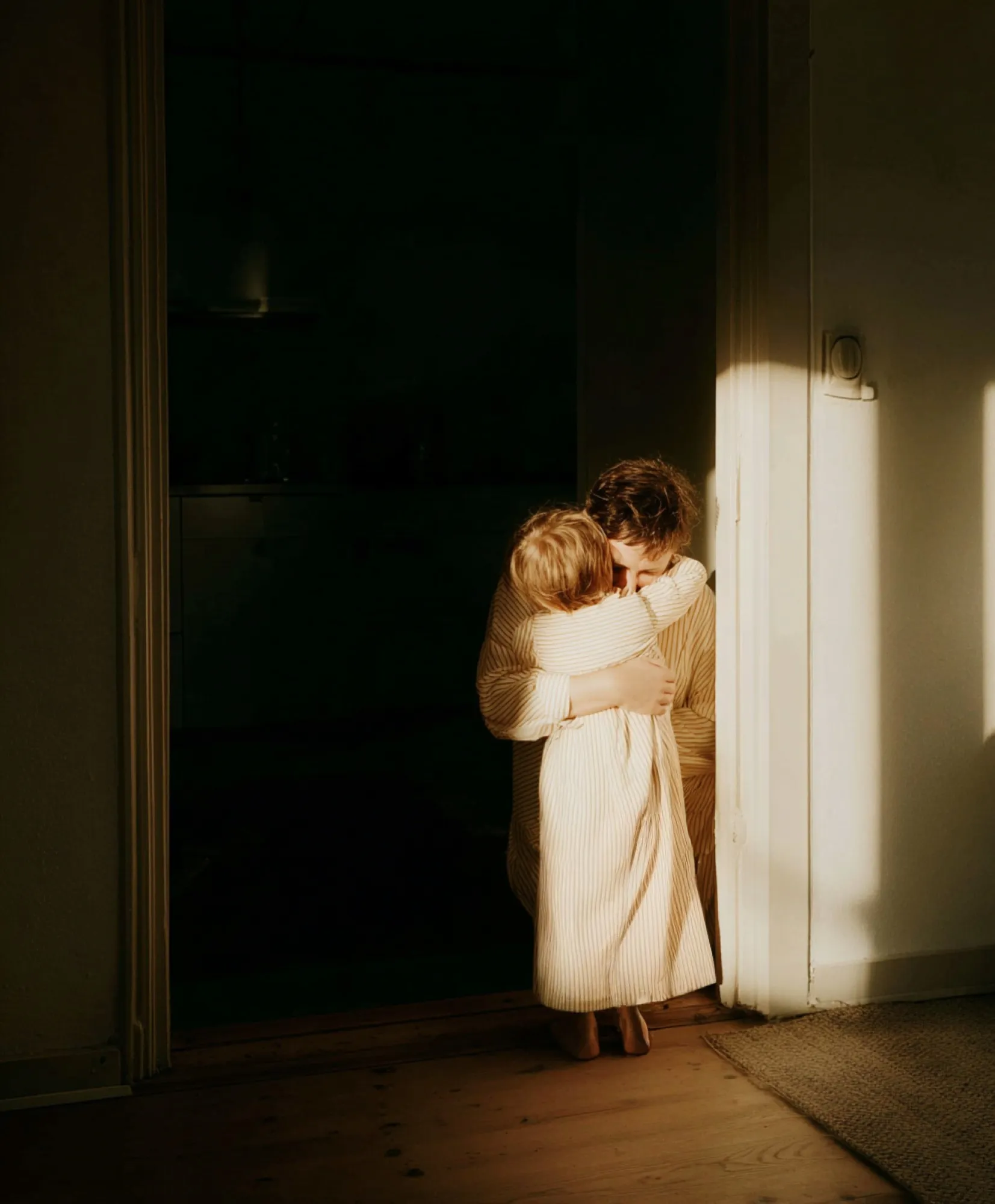
There is a pattern in almost every family whose evenings work: they do roughly the same things, in roughly the same order, at roughly the same time. Not because the order is magic, but because predictability is the only thing that makes a tired child cooperative.
A routine is not a schedule. It is a sequence.
Why the sequence matters more than the clock
A child reads context better than numbers. Knowing that after teeth comes the book, and after the book the lamp goes off makes the ending predictable, and the predictable is rarely frightening.
It also makes the routine portable. It works at a grandparent’s house, in a hotel room, in a tent. The clock moves; the order does not.
Four parts are enough
Most durable evening routines share the same shape. More parts do not make it better, only longer.
A shift. Something that marks the end of the day. A bath, a shower, or simply changing into sleepwear. Changing clothes is itself a signal — which is why sleepwear does more than it appears to.
A wind-down. Lower light, quieter voices, no screens. Light is the single strongest factor; it decides when the body starts producing melatonin.
Something shared. A book, a song, a question about the day. This is the part children remember as adults, and the only part that is hard to replace.
A goodbye. The same words, every night. Children who know exactly how the goodbye sounds rarely call you back a fourth time.
What makes routines fragile
Most evening routines collapse for the same three reasons.
It is too long. A forty-minute routine does not survive a Friday in November. Build the shortest version that works, and add only what you are willing to do on a bad day too.
It requires one particular parent. If only one of you can sing the song, the routine is brittle. Make every part something either of you can do.
It gets negotiated. If the length of the book is discussed every night, the evening becomes a negotiation. Fix the format once — one book, three songs — and let the content be free.
When evenings break anyway
They will. Illness, travel, a sibling arriving, a four-year-old who is suddenly afraid of the wardrobe. A routine broken for three weeks is not lost; it just needs restarting in its shortest form.
And some evenings simply need to be over. No routine makes that evening good. One only makes it shorter.
Where the clothes come in
We make sleepwear, so we are not neutral. But there is a reason the change into a nightgown is so often what actually starts the evening: it is the first step in the sequence a child can do alone.
A garment that goes on without help, does not itch at the neck and does not need discussing removes one of the evening’s possible arguments. It is not much. Across a thousand evenings, it is not nothing either.