
Choosing children’s sleepwear that lasts
A guide to fibres, fit and washing — so a child's pyjamas or nightgown outlasts a single season and can be handed on to the next child.
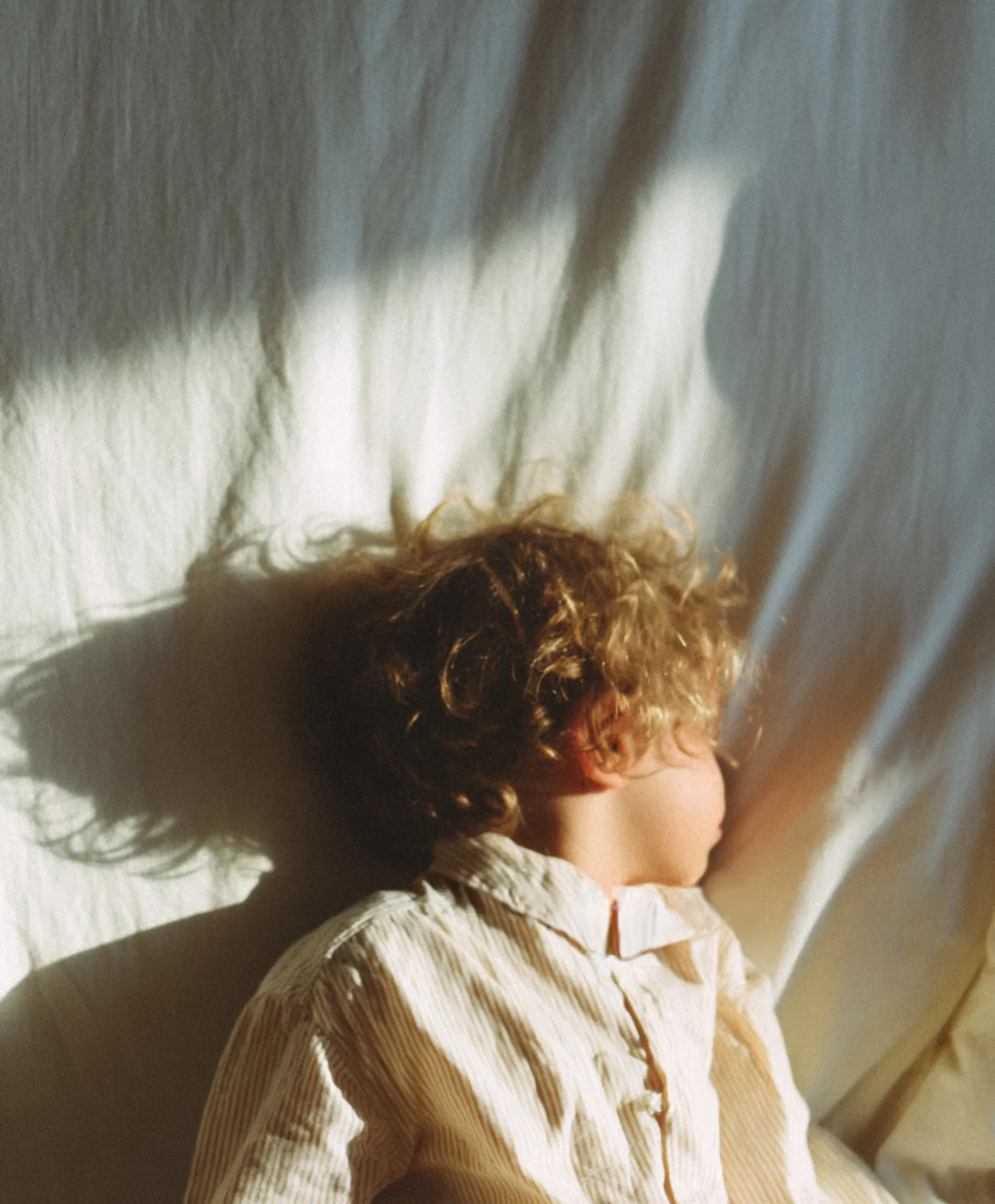
A child sleeps around ten hours a night. Over a year, sleepwear is the garment they wear most — and almost always the garment chosen with the least care. It is usually the cheapest thing in the wardrobe, bought in multipacks, and the first thing thrown out.
This is about choosing the other way round.
The fibre does most of the work
A sleeping child regulates temperature worse than an adult. The garment has to do part of that work: move moisture away, breathe when the room warms, hold heat when the night cools. In practice only natural fibres manage all three.
Cotton
Cotton is the default for good reasons: soft, washable hot, cheap to mend. But cotton is not one material.
Poplin is tightly woven and smooth, with a cool drape. It is what you want in a nightshirt that should hang well and feel cool against the skin on a summer night.
Flannel is brushed cotton. Air caught in the raised fibres makes it warm without making it heavy. Good from October to March in an ordinary cool Nordic bedroom.
Jersey is knitted rather than woven, and therefore stretchy. It is the most forgiving choice for small children who move a lot in their sleep, and also the first to lose its shape.
Long-staple cotton — sold as pima or Egyptian — abrades more slowly and pills less. It costs more per garment and less per year.
Linen
Linen is the coolest of all and improves with time: stiff for the first few washes, soft after ten, genuinely good after fifty. It creases, which some people cannot bear. For sleepwear it does not matter at all.
Merino wool
Fine merino does not prickle and can be worn against bare skin. It holds warmth even when damp, and it is the only fibre that works equally well on a warm night and a cold one. The drawbacks are price and a gentler wash.
What to skip
Polyester and polyamide breathe poorly and build static. A child sweating in synthetics wakes more often. The exception is a small amount of elastane in a cuff, where it does real work.
Fit: close or full, rarely in between
Sleepwear should either sit near the body or fall freely. What sits halfway is what tangles around arms and legs at three in the morning.
Look for flat seams, soft elastics and printed rather than sewn-in labels. Check that the neck opening clears the head without a fight — most arguments about pyjamas are about that, not about the garment.
Buying to be grown into
A garment meant to last two sizes has to be planned for it. Look for:
- Turn-up sleeves and legs with enough allowance to be let down.
- Buttons rather than snaps — they can be moved, and replaced when they break.
- Straight cuts through the waist, which survive a growth spurt without becoming short in the body.
- Seams that can be opened. An overlocked seam trimmed close cannot be mended. A wider, stitched seam can.
Washing: what actually wears a garment out
Most sleepwear does not die of use. It dies of laundry. Three habits extend its life considerably:
- Lower the temperature. 40°C is enough for a garment changed weekly. 60°C is for illness, not for Tuesdays.
- Skip the tumble dryer. That is where cotton shrinks and fibres snap. Hang it instead.
- Turn it inside out. It is the outside that abrades against the drum.
Leave fabric softener out of towels and sleepwear — it coats the fibre and makes cotton worse at absorbing moisture, which is precisely the opposite of what you want against skin at night.
And then
A nightgown that is well considered, properly sewn and correctly washed will outlast a child with room to spare. That is the entire point. It can be mended when it goes at the knee, let out when the arms get long, and finally folded into a drawer until it is needed again.
That is also the moment it stops being a garment and starts being something else.