
Vemod
A Swedish word for missing something while you still have it — and why the clothes of childhood carry more than they weigh.
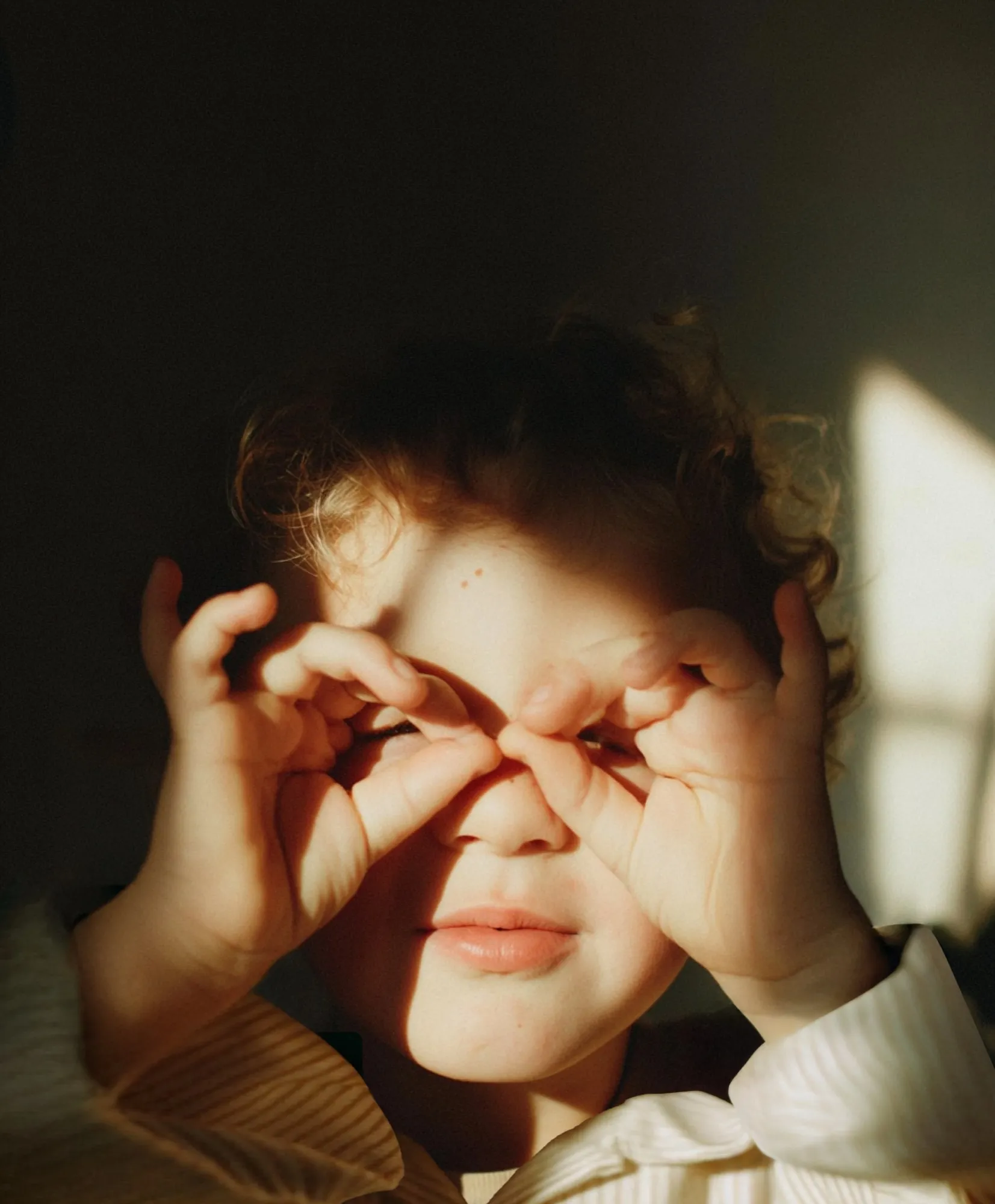
Swedish has a word that resists being handed to another language. Vemod. Dictionaries offer melancholy, wistfulness, pensive sadness, and all three miss something. Melancholy is heavier. Wistfulness is too light. Vemod is gentler than grief and darker than longing, and — this is the important part — it is aimed at something you actually have.
You can feel vemod about a child sitting in the next room.
Missing in advance
The strange condition of parenthood is that you lose the child continuously while you have them. The three-year-old is replaced by a four-year-old. Nobody dies, nothing breaks, and yet the three-year-old is gone — and you are the only person alive who remembers exactly how she said milk.
That is why photographs of children are so hard to look at later. They do not record a moment. They record a person who no longer exists.
Why garments carry it
A photograph shows. A garment was there.
That is a material difference, not a poetic one. The cloth absorbed sweat and detergent, it wore thin where the knees wore thin, it took a stain one evening nobody remembers now. A garment is a physical record of the body that wore it — and sleepwear more than anything else, because it is worn against bare skin, ten hours at a stretch, hundreds of nights running.
Finding a small nightgown in a drawer fifteen years later is not nostalgia. It is recognition. The hand remembers the cloth.
Childhood is not bright
There is a tradition in children’s clothing which holds that childhood is happy, and therefore makes the clothes happy: strong colours, cartoon animals, exclamation marks.
It does not match childhood as children actually describe it. It is playful and serious at once. Light and dark. Easy and frightening. A child genuinely afraid of the dark is not well served by pyjamas insisting everything is fun.
We think evening clothes should hold both halves. That they should be able to be there on the best night of the year and on the night someone cries for two hours without being able to say why.
Building for what comes after
If a garment is to carry a memory, it has to survive long enough to become one. That is a technical requirement, not an emotional one: seams that open, allowances that let out, fibres that soften rather than thin, buttons that can be replaced.
It sounds unromantic, and that is exactly the point. Vemod cannot be manufactured. You can only make a garment good enough that somebody gets to feel it, twenty years on, with the cloth in their hand.
That is our entire business, in a word we cannot translate.